Showing posts with label balance sheet equation. Show all posts

Monday, April 20, 2015

Tricks to Remember Debits and Credits


Debits and credits form the foundation of basic accounting. These terms help define double-entry accounting. As an accountant, every transaction you post involves debits and credits. Many people have trouble grasping the rules for debits and credits. Here are some tricks to understand debits and credits.

For free templates to understand debits and credits (and dozens of other accounting concepts), access the accountinged.com resource collection. Try this online academy free for 10 days.

The rules that stays the same
Debits and credits are confusing, because some rules change- and other don’t. So, let’s first consider two rules that never change…..

Debits are always on the left; credits are always on the right           
Total debits must always equal total credits

Period. End of story.

Now, that statement may sound strange. But it makes sense when you consider that most of the other rules about debits and credits change. The other rules change; depending on what type of account is involved.

T-Accounts
A key tool to understand these other debit and credit rules is to use t-accounts. Let’s use the cash account as an example. Draw a T. Write “cash” at the top, “debt” on the bottom left (just below the horizontal line) and “credit” on the right. Your t-account will look something like this:

                                               Cash
                   Debit                                               Credit

Again, head over to the accountinged.com free resources. You’ll find an excel template called “Basic accounting transactions and journal entries” that will explain t-accounts in detail.
T-accounts are great, because you can see impact of debits and credits.


The accounting equation (balance sheet equation)
Some accounts are increased with a debit, others with a credit. One way to keep this straight is to consider the accounting (or balance sheet) equation:

Assets = liabilities + equity

Assets are on the left side of the equal sign. Asset accounts are increased with a debit. Liability and equity accounts are on the right side on the equal sign- and they are increased with credits. If you need to increase the balance of an account, consider what type of account it is. Once you know that, you’ll know how to increase the account (either debit or credit).

Say that you need to increase accounts payable. Payables are liability accounts. That means that you increase accounts payable by crediting.

Here’s another way to explain it: If there is an equal sign, that means that the amount on the left has to be equal to the right. So, if one side uses debits, the other side has to use credits. Total debits always equal total credits- and those totals are on opposite sides of the equal sign.

Normal balances
We refer to a normal balance for an account as a positive balance. Cash, for example, has a normal debit balance. If you run a trial balance and have an ending credit balance in cash, that is not normal. A negative (credit) balance in cash means that your account is overdrawn. That credit balance should be reclassified as a loan. Loans are liability accounts-, which are increased with credit balances. A normal balance for a loan is a credit.

How do you keep these concepts straight?
Are these tools helpful? Do you have a tool you use to remember debits and credits? If so, I’d love to hear from you. Please comment below.

Ken Boyd
St. Louis Test Preparation
Author: Cost Accounting for Dummies, Accounting All-In-One for Dummies, The CPA Exam for Dummies and 1,001 Accounting Questions for Dummies (2015)
Co-Founder: accountinged.com
 (amazon author page) amazon.com/author/kenboyd 
(cell) (314) 913-6529
(website) www.stltest.net
(you tube channel) kenboydstl


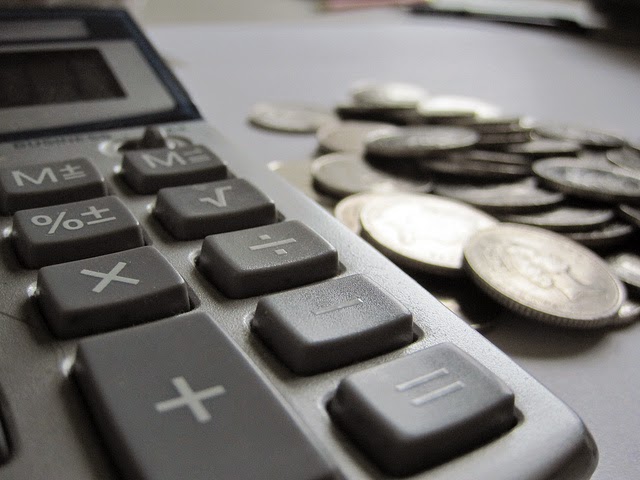
Image: Images Money, Calculator and Money , CC by 2.0

Tuesday, September 9, 2014

Aged Equipment and the Risk of Depreciation


U.S. manufacturing equipment is getting older, on average. The average age of industrial equipment in the U.S. has risen above 10 years- the highest since 1938 (Morgan Stanley). If fact, the growth rate of all types of capital spending has slowed. The growth rate was 3% last year- compared with a long-term average of 8%. So, what’s the impact of the spending slowdown on business?


The impact is discussed in a 9/3/14 article in the Wall Street Journal article: “U.S. Manufacturing Rolls on Aged Wheels”. Here’s a link:


One reason for the slowdown is business uncertainty. That uncertainty relates to possible interest rate increases, the slow growth U.S. economy and tax policy. Some firms are investing more assets in Asia and Latin America- areas that may provide more growth.

If a firm wants to remain in business and sell a quality product, they- eventually- need to replace assets. In many cases, the annual maintenance cost of the equipment becomes more expensive than annual cost of financing new equipment.

Imagine that you were considering buying Bob’s Pizza Shop. What you’re really buying is the Shop’s net assets, or assets – liabilities. The fixed assets (equipment and machinery) are valued at original cost less accumulated depreciation. Accumulated depreciation is the sum total of all depreciation taken for the asset since it was purchased.

Say you look at the Pizza Shop’s balance sheet. You noticed that a $30,000 oven has $28,000 in accumulated deprecation. If you buy the Pizza Shop, you’ll need to replace that oven soon. As a result, you reduce the price you’re willing to pay for the business After all, you’ll need cash to buy the replacement oven.

To spur economic growth, the federal government will sometimes allow bonus depreciation. This allows buyer to depreciation much of the asset’s value in the first few years. The depreciation generates more expense and less taxable income. Bonus depreciation encourages businesses to purchase fixed assets- which may increase economic activity.

There are several methods of depreciation that are widely used. Straight line depreciation expenses the same amount of depreciation each year. Accelerated depreciation methods, such as double declining balance, depreciate more dollars in the early years and less in later years.

Regardless of which depreciation method you choose, you can’t depreciate more than the depreciable base of the asset. Depreciable base is the asset’s cost less salvage value. Salvage value is the amount you can sell the asset for at the end of its useful life. If you buy a $30,000 truck with a $5,000 salvage value, the depreciable base is $25,000 ($30,000 less $5,000).
  
Check out my podcast on this subject:


For blog and article writing, tutoring and speaking on investments and finance, contact me here:

Ken Boyd
St. Louis Test Preparation
Author: Cost Accounting for Dummies, Accounting All-In-One for Dummies, The CPA Exam for Dummies and 1,001 Accounting Questions for Dummies (2015)
 (amazon author page) amazon.com/author/kenboyd 
(cell) (314) 913-6529
(website) www.stltest.net
(you tube channel) kenboydstl
(podcast: website link and on ITunes)
https://itunes.apple.com/us/podcast/accounting-accidentally/id911793420 
(facebook) St Louis Test Prep
(twitter) @StLouisTestPrep
Author: Lynda.com
Instructor: Financial Times/ ExecSense Webinars

Image: Creative Commons License (4.0). Photo by Alden Jewell